
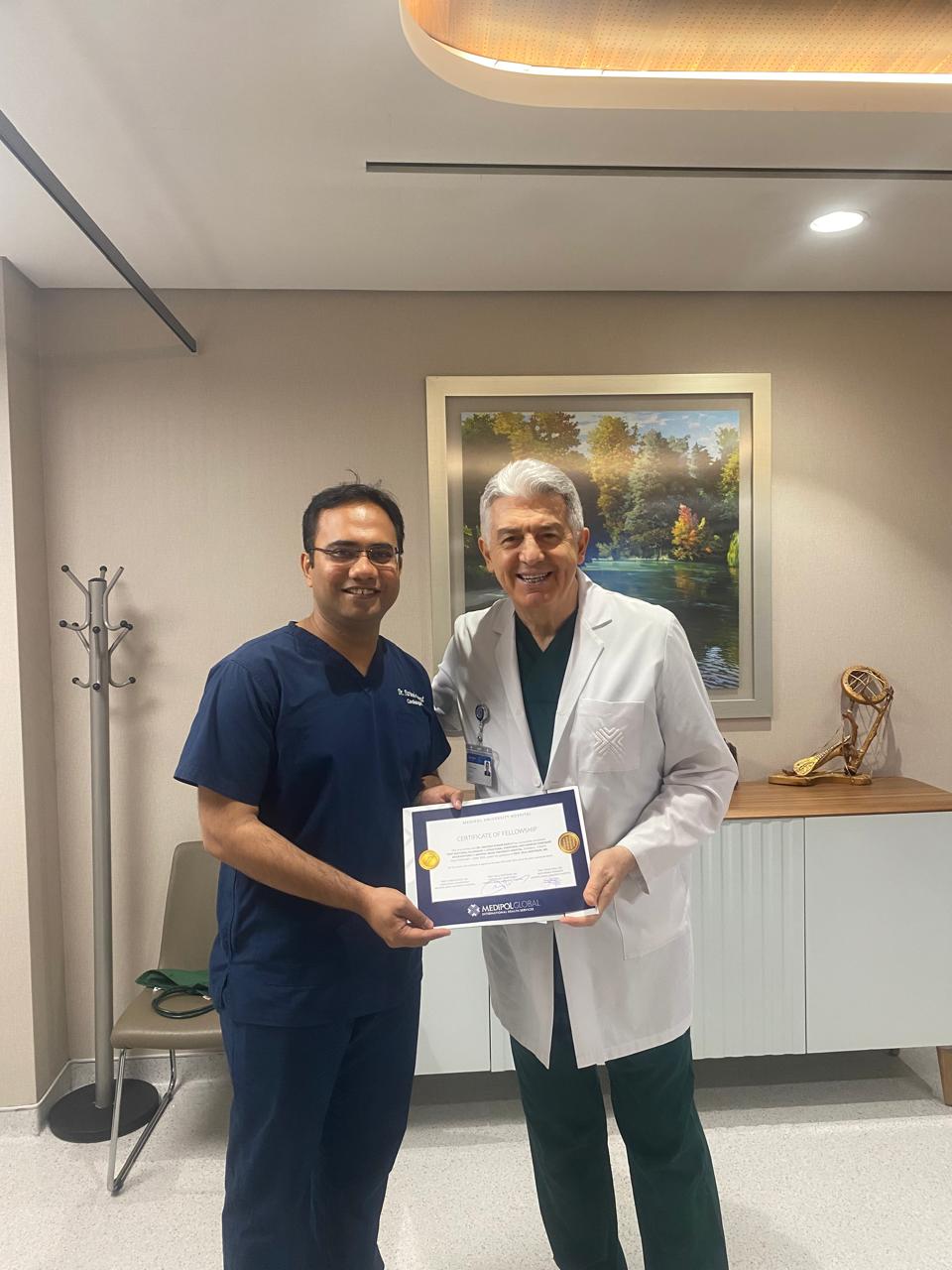
Best Cardiologist in Indore — Dr. Paritosh Kumar Rajput
Looking for the best cardiologist in Indore? Dr. Paritosh Kumar Rajput (MD, DM Cardiology) is one of the city's most trusted heart specialists, with 13+ years of experience and 10,000+ cardiac procedures at Choithram Hospital & Research Centre. From a first heart check-up to advanced treatment for a heart attack, patients across Indore and the wider Malwa region rely on him for accurate diagnosis, honest advice and modern, guideline-based care. This page explains what a cardiologist does, the warning signs that mean you should book a visit, the conditions and tests involved, the treatments available, and how to prepare for your appointment.
📞 Call +91 62647 63216 | 🕑 OPD: Mon–Sat, 10 AM–6 PM | 📍 Choithram Hospital, 14 Manik Bagh Road, Indore 452014
What does a cardiologist do?
A cardiologist is a doctor who specialises in the heart and blood vessels. Their work covers three broad areas: diagnosis (finding out what is wrong using clinical examination and tests), treatment (medicines, lifestyle guidance, catheter-based procedures and, when needed, referral for surgery), and prevention (reducing your risk of a future heart attack or stroke). An interventional cardiologist like Dr. Rajput has additional training to perform minimally invasive procedures such as angioplasty and stenting through a small puncture in the wrist or groin — treating blockages without open surgery. This combination means most heart problems can be assessed and treated under one roof.
When should you see a cardiologist in Indore?
Some heart symptoms are obvious; many are subtle and easy to dismiss. Book a consultation if you notice any of the following — early assessment can prevent a serious event:
- Chest pain, pressure or tightness, especially on exertion or with stress
- Breathlessness or unusual fatigue during everyday activity
- Palpitations — a racing, pounding or irregular heartbeat
- Dizziness, light-headedness, fainting or blackouts
- Swelling in the legs, ankles or feet
- Known risk factors — high blood pressure, high cholesterol, diabetes, smoking, obesity, or a family history of early heart disease
You should also see a cardiologist if another doctor has found an abnormal ECG, an abnormal stress test, or a heart murmur, or if you are over 40 and have never had a heart risk assessment. Treat sudden, severe chest pain — particularly with sweating, nausea, or pain spreading to the arm or jaw — as an emergency and seek immediate care.
Heart conditions treated
Dr. Rajput diagnoses and manages the full range of adult cardiac conditions, including:
- Coronary artery disease (CAD) — narrowing of the heart's arteries that causes angina and heart attacks.
- Heart attack (myocardial infarction) — a blocked artery starving the heart muscle; treated urgently with primary angioplasty.
- Heart failure — when the heart cannot pump efficiently, causing breathlessness and swelling; managed with medicines and, in selected cases, device therapy.
- Arrhythmias — irregular heart rhythms such as atrial fibrillation, treated with medication, pacemakers or ICDs.
- Heart valve disease — narrowed or leaking valves (aortic stenosis, mitral regurgitation), correctable with TAVR/TAVI or valve procedures.
- High blood pressure (hypertension) and high cholesterol — major, treatable risk factors.
- Cardiomyopathy — diseases of the heart muscle itself.
- Congenital heart defects in adults — such as ASD, VSD and PDA, often closable without surgery.
- Peripheral artery disease (PAD) — narrowing of arteries in the legs.
Diagnostic tests and evaluation
Accurate treatment starts with accurate diagnosis. Depending on your symptoms, your cardiologist may use:
- ECG (electrocardiogram) — a quick recording of the heart's electrical activity.
- Echocardiography — an ultrasound scan showing the heart's chambers, valves and pumping strength.
- Treadmill / stress test (TMT) — checks how the heart copes with exertion.
- Holter monitoring — 24–48 hour rhythm recording to catch intermittent palpitations.
- Blood tests — cholesterol, blood sugar, kidney function and cardiac markers.
- Coronary angiography — the gold-standard X-ray test that shows blockages directly, often followed in the same sitting by angioplasty if needed.
Treatments and services offered
Care is tailored to your condition, always starting with the least invasive effective option:
- Medical management — evidence-based medicines and lifestyle guidance.
- Coronary angioplasty & stenting — opening blocked arteries with a balloon and drug-eluting stent, usually via the wrist.
- Primary angioplasty — emergency, life-saving treatment during a heart attack.
- TAVR / TAVI and other structural heart procedures for valve disease.
- Pacemaker, ICD and CRT device implantation for rhythm and heart-failure problems.
- Heart failure treatment and long-term follow-up.
- Referral and coordination for cardiac surgery when that is the best option.
For advanced, catheter-based treatment specifically, see our dedicated page on the interventional cardiologist in Indore.
Preventive cardiology — protecting your heart
The best heart attack is the one that never happens. A large share of heart disease is preventable by controlling risk factors early. Dr. Rajput places strong emphasis on prevention: assessing your personal risk, then helping you lower it through practical steps — stopping smoking, a balanced diet lower in salt and saturated fat, regular physical activity, healthy weight, and tight control of blood pressure, cholesterol and blood sugar. If you have diabetes or a family history of early heart disease, a periodic cardiac check-up is especially valuable, because problems can be caught and treated before they cause symptoms.
What to expect at your first consultation
Your first visit is unhurried and centred on understanding your problem. It typically includes a detailed history of your symptoms and risk factors, a physical examination, and a baseline ECG. Where needed, an echocardiogram or stress test is arranged, often the same day. Dr. Rajput then explains the findings in plain language, outlines all suitable options — medical, interventional or surgical — with their pros and cons, and agrees a plan with you. Bring any previous reports, ECGs, angiography CDs and a list of your current medicines to make the visit as useful as possible.
Cost and insurance
The cost of cardiac care in Indore depends on the consultation, the tests required and any procedure performed. Many treatments — including angioplasty and device implants — are covered under Ayushman Bharat and cashless insurance/TPA schemes. For current consultation fees, procedure estimates and help with insurance pre-authorisation, please call +91 62647 63216. [Practice note: add specific consultation fee, package ranges and empanelled insurers here.]
Why choose Dr. Paritosh Kumar Rajput
- MD, DM (Cardiology) with 13+ years in interventional cardiology
- 10,000+ cardiac procedures performed
- Radial-first, minimally invasive approach — less pain, faster recovery
- Practice aligned with ESC & ACC international guidelines
- Based at Choithram Hospital & Research Centre, a leading Indore cardiac centre with a modern cath lab
- Clear, patient-friendly explanations and shared decision-making
- Trusted by patients from across Indore and Malwa
Heart attack? Act fast — every minute counts
A heart attack is a medical emergency. If you or someone near you has severe chest pain or pressure, pain radiating to the arm, neck or jaw, cold sweat, nausea or sudden breathlessness, call emergency services immediately and get to a hospital with a cardiac cath lab. Do not wait to "see if it passes" and do not drive yourself. The faster a blocked artery is reopened with primary angioplasty, the more heart muscle is saved — which is why timing is critical.
Serving Indore and the Malwa region
Alongside Indore, patients travel to the clinic from Ujjain, Dewas, Ratlam, Mandsaur, Dhar, Mhow, Pithampur, Shajapur and other towns across Malwa — so expert cardiology care is available close to home, without travelling to a metro city.
इंदौर में बेस्ट कार्डियोलॉजिस्ट
डॉ. परितोष कुमार राजपूत (MD, DM कार्डियोलॉजी) इंदौर के अनुभवी और भरोसेमंद हृदय रोग विशेषज्ञ हैं — 13+ वर्षों का अनुभव और 10,000+ हृदय प्रक्रियाएं। वे कोरोनरी आर्टरी डिजीज, हार्ट अटैक, हार्ट फेलियर, वाल्व रोग, अनियमित धड़कन और उच्च रक्तचाप जैसी सभी हृदय समस्याओं का इलाज करते हैं। एंजियोप्लास्टी, TAVR और पेसमेकर में विशेषज्ञता। सीने में दर्द, सांस फूलना, धड़कन तेज़ होना या पैरों में सूजन जैसी समस्या होने पर देर न करें। अपॉइंटमेंट के लिए कॉल करें +91 62647 63216। गंभीर सीने के दर्द को आपातकाल समझें और तुरंत अस्पताल पहुँचें।
Understanding common heart problems in more detail
Coronary artery disease develops when fatty deposits (plaque) build up inside the heart's arteries, narrowing them and reducing blood flow. Early on it may cause angina — chest discomfort on exertion that eases with rest. If a plaque suddenly ruptures and blocks the artery completely, the result is a heart attack. This is why chest pain should never be ignored, and why controlling cholesterol, blood pressure and blood sugar matters so much.
Arrhythmias are problems with the heart's rhythm. The heart may beat too fast, too slow or irregularly. Atrial fibrillation, the commonest sustained arrhythmia, raises the risk of stroke and often needs blood-thinning medication alongside rhythm control. A slow rhythm from a faulty electrical system may need a pacemaker, while dangerous fast rhythms may be treated with an ICD.
Heart failure does not mean the heart has stopped — it means it is not pumping as well as it should, leading to breathlessness, tiredness and fluid retention. With the right combination of modern medicines, device therapy where appropriate, and lifestyle changes, many people with heart failure live active lives for years.
Valve disease occurs when a heart valve becomes narrowed (stenosis) or leaky (regurgitation). Aortic stenosis, common in older adults, can now often be treated without open surgery using TAVR/TAVI — a catheter-based valve replacement with a much shorter recovery.
Heart disease risk factors — and what you can do
Understanding your personal risk is the first step to protecting your heart. Risk factors fall into two groups. Those you cannot change include age, sex and family history. Those you can change or control are where the biggest gains lie:
- Smoking — the single most important reversible risk factor; quitting begins to lower risk within weeks.
- High blood pressure — often symptomless, so it must be measured; well-controlled BP sharply cuts heart-attack and stroke risk.
- High cholesterol — manageable with diet and, where needed, medication such as statins.
- Diabetes — a major driver of heart disease; tight blood-sugar control protects the arteries.
- Obesity and physical inactivity — regular activity and a healthy weight improve nearly every risk factor at once.
- Stress and poor sleep — increasingly recognised contributors to heart disease.
A cardiac risk assessment brings these together into a clear picture of your risk and a practical plan to reduce it.
Recovery, cardiac rehabilitation and follow-up
Treatment does not end when you leave the hospital. After a heart attack, angioplasty or device procedure, structured follow-up protects your long-term health. This usually includes taking prescribed medicines reliably — particularly blood thinners after stenting, which should never be stopped without advice — along with gradual, guided return to activity. Cardiac rehabilitation, combining supervised exercise, diet advice and risk-factor management, is one of the most effective ways to improve recovery, prevent repeat events and rebuild confidence. Regular review appointments allow your cardiologist to adjust medication, check your progress and catch any new problems early.
General cardiologist, interventional cardiologist or cardiac surgeon?
These terms are often confused. A general (non-invasive) cardiologist focuses on diagnosis and medical management of heart disease. An interventional cardiologist — Dr. Rajput's specialty — additionally performs catheter-based procedures such as angioplasty, stenting and TAVR through tiny punctures, without opening the chest. A cardiac surgeon performs open-heart operations such as bypass surgery and surgical valve replacement. Many patients can be treated completely by an interventional cardiologist; when surgery is the better option, a "Heart Team" approach ensures you get the right treatment for your specific anatomy. Learn more on our interventional cardiologist in Indore page.
Heart symptoms you should never ignore
Many people delay seeing a cardiologist because symptoms come and go, or seem minor. But the heart often gives early warnings. Chest discomfort — described as pressure, heaviness, burning or tightness rather than a sharp pain — that appears with exertion or emotion and settles with rest is a classic warning of angina. Breathlessness that is new, worsening, or occurs lying flat deserves attention. Palpitations with dizziness or fainting can signal a rhythm problem. Unexplained fatigue, especially in women and people with diabetes, can be an atypical sign of heart disease. Swelling of both legs, waking at night short of breath, or reduced exercise tolerance all warrant a check. Recognising these signs early — and acting on them — is one of the most powerful things you can do for your heart.
Second opinions and complex cases
If you have been advised bypass surgery, a valve operation, or a complex procedure, a second opinion from an experienced interventional cardiologist can be reassuring and, at times, open up less invasive options. Conditions such as chronic total occlusions, multi-vessel disease, high-risk valve disease or previous failed procedures benefit from careful, individualised assessment. Dr. Rajput reviews your angiography and reports in detail and gives an honest recommendation — including when surgery genuinely is the best path. The goal is always the safest, most effective treatment for you, not the most complicated one.
Facilities at our Indore cardiac centre
Care is delivered at Choithram Hospital & Research Centre, a well-established multi-speciality hospital in Indore with a modern cardiac catheterisation laboratory (cath lab), round-the-clock emergency support and critical-care facilities. This allows the full pathway — from ECG and echocardiography to coronary angiography, angioplasty, structural heart procedures and device implantation — to be carried out in one place, including time-critical primary angioplasty for heart attacks. Having advanced interventional cardiology available locally means patients across Indore and Malwa no longer need to travel to a metro city for high-quality heart care.
Book your heart check-up in Indore today
Whether you have troubling symptoms, known risk factors, or simply want peace of mind with a preventive check-up, timely assessment is the smartest investment in your health. Dr. Paritosh Kumar Rajput and the team make it easy to get expert cardiology care in Indore — with clear explanations, modern treatment options and support at every step. Call +91 62647 63216, message on WhatsApp, or use the online appointment form to book a consultation at Choithram Hospital & Research Centre.
Frequently asked questions
Who is the best cardiologist in Indore?
Dr. Paritosh Kumar Rajput is a leading interventional cardiologist in Indore with an MD and DM in Cardiology, 13+ years of experience and 10,000+ cardiac procedures. He practises at Choithram Hospital & Research Centre and treats patients from across Indore and the Malwa region.
When should I see a cardiologist?
See a cardiologist for chest pain or tightness, breathlessness, palpitations, dizziness or fainting, or swelling in the legs — or if you have high blood pressure, high cholesterol, diabetes or a family history of heart disease. Severe or crushing chest pain is a medical emergency.
What does a cardiologist do?
A cardiologist diagnoses and treats diseases of the heart and blood vessels — including coronary artery disease, heart failure, arrhythmia, valve disease and high blood pressure — using tests such as ECG, echocardiography and angiography, and treatments ranging from medicines to angioplasty and devices.
What tests might a cardiologist order?
Common tests include an ECG, echocardiography (heart ultrasound), a treadmill/stress test, Holter monitoring, blood tests and, when needed, coronary angiography or a CT coronary angiogram to look directly at the arteries.
How do I book an appointment?
Call +91 62647 63216 or use the online appointment form. OPD is Monday to Saturday, 10 AM to 6 PM, at Choithram Hospital & Research Centre, Indore.
Do you treat patients from outside Indore?
Yes. Patients regularly travel from Ujjain, Dewas, Ratlam, Mandsaur, Dhar, Mhow, Pithampur, Shajapur and other towns across Malwa for consultation and treatment.
How much does a cardiologist consultation cost in Indore?
Consultation fees vary; many procedures are covered under Ayushman Bharat and cashless insurance/TPA schemes. Contact the clinic on +91 62647 63216 for current fees and insurance help.
Can heart disease be prevented?
Much heart disease is preventable. Not smoking, eating a balanced diet, staying active, maintaining a healthy weight, and controlling blood pressure, cholesterol and diabetes dramatically lower your risk. Regular check-ups help catch problems early.
What should I do during a suspected heart attack?
Call emergency services immediately for severe chest pain, pain spreading to the arm or jaw, sweating or breathlessness. Do not drive yourself. Fast treatment — including primary angioplasty — saves heart muscle and lives.
Is Dr. Rajput an interventional cardiologist?
Yes. Dr. Rajput specialises in interventional and structural cardiology, including coronary angioplasty, TAVR/TAVI and device procedures. See the dedicated interventional cardiologist in Indore page for details.
Medically reviewed by Dr. Paritosh Kumar Rajput, MD, DM (Cardiology). This page is for patient education only and is not a substitute for professional medical advice, diagnosis or treatment. Please consult a qualified cardiologist for guidance specific to your condition.