
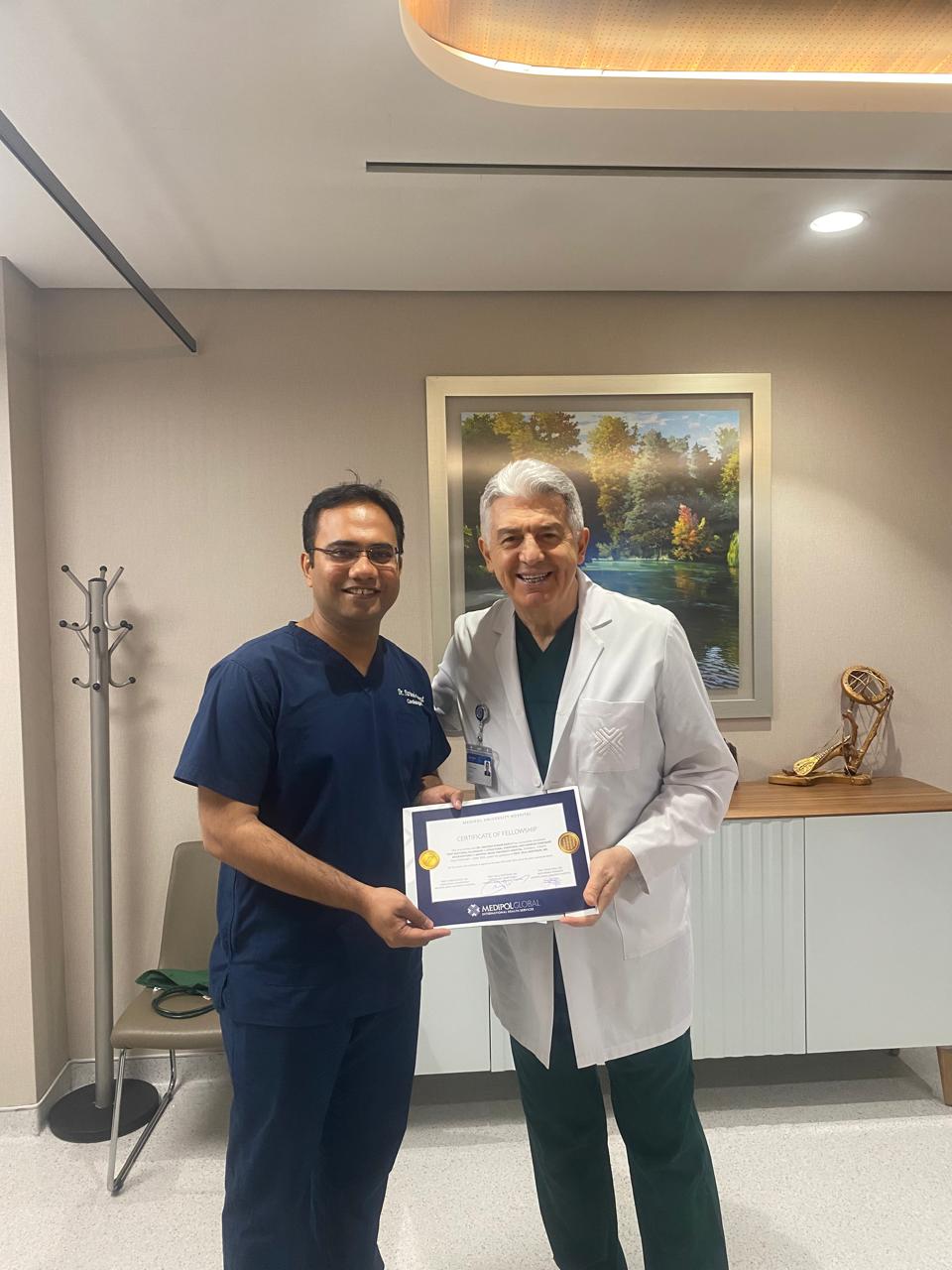
Interventional Cardiologist in Indore — Dr. Paritosh Kumar Rajput
An interventional cardiologist in Indore, Dr. Paritosh Kumar Rajput (MD, DM Cardiology) specialises in treating heart and blood-vessel disease using minimally invasive, catheter-based techniques — opening blocked arteries, replacing heart valves and implanting devices without open-heart surgery. With 13+ years of experience and 10,000+ cardiac procedures at Choithram Hospital & Research Centre, he offers advanced interventional and structural heart care locally, so patients across Indore and the Malwa region no longer need to travel to a metro city. This page explains what interventional cardiology is, the full range of procedures available, the radial (wrist) approach, what to expect, recovery, safety and cost.
📞 Call +91 62647 63216 | 🕑 OPD: Mon–Sat, 10 AM–6 PM | 📍 Choithram Hospital, 14 Manik Bagh Road, Indore 452014
What is interventional cardiology?
Interventional cardiology is the branch of heart medicine that diagnoses and treats cardiovascular disease using thin, flexible tubes called catheters. These are guided to the heart through a small puncture — usually in the wrist — under local anaesthesia, with live X-ray imaging. Through this tiny access point, the cardiologist can open narrowed arteries with balloons and stents, replace diseased valves, close holes in the heart, and place pacemakers and defibrillators. Because there is no chest incision, patients experience less pain, a lower risk of infection, and a dramatically shorter recovery than with open surgery — many go home within a day. Interventional cardiology has transformed the treatment of heart attacks, coronary artery disease and, increasingly, valve disease.
How an interventional cardiologist differs from other heart doctors
A general cardiologist focuses on diagnosis and medical treatment. An interventional cardiologist has completed additional training to perform catheter-based procedures. A cardiac surgeon performs open operations such as bypass and surgical valve replacement. For a large proportion of patients, an interventional approach avoids surgery altogether; when open surgery genuinely is the better option, a "Heart Team" discussion ensures the right decision. For general heart care and diagnosis, see our cardiologist in Indore page.
When do you need an interventional cardiologist?
You may be referred to, or benefit from, an interventional cardiologist if you have:
- A heart attack — where emergency primary angioplasty is the gold-standard treatment
- Angina or significant coronary artery blockages found on a stress test or CT scan
- Severe valve disease, such as aortic stenosis, that may be treatable with TAVR/TAVI
- A rhythm problem needing a pacemaker, ICD or CRT device
- A hole in the heart (ASD, VSD, PDA) suitable for device closure
- Peripheral artery disease causing leg pain from narrowed arteries
Interventional & structural heart procedures offered
Dr. Rajput performs the full spectrum of catheter-based procedures:
- Coronary angiography — the diagnostic X-ray study that maps blockages in the heart's arteries, guiding all further treatment.
- Coronary angioplasty & stenting (PCI) — opening a blocked artery with a balloon and a drug-eluting stent, the most common interventional procedure.
- Primary angioplasty — emergency, time-critical PCI during an active heart attack to reopen the artery and save heart muscle.
- Complex & CTO angioplasty — for chronic total occlusions, left-main, bifurcation and heavily calcified arteries requiring advanced techniques.
- IVUS / OCT imaging & FFR — intravascular imaging and pressure measurement to place stents precisely and confirm which blockages truly need treatment.
- TAVR / TAVI — catheter-based replacement of a narrowed aortic valve, a major advance for patients unsuitable for open surgery.
- TMVR and valve-in-valve procedures for mitral valve disease and failed bioprosthetic valves.
- Device closure of ASD, VSD and PDA — sealing holes in the heart without surgery.
- Pacemaker, ICD & CRT implantation for slow rhythms, dangerous fast rhythms and heart failure.
- Peripheral angioplasty — opening narrowed arteries in the legs and other parts of the body.
The radial (wrist) approach — less pain, faster recovery
Wherever possible, Dr. Rajput performs procedures through the radial artery in the wrist rather than the femoral artery in the groin. Research and daily practice show the radial route causes significantly less bleeding, less discomfort, and lets patients sit up, eat and walk much sooner. For most straightforward angioplasty cases this means same-day mobilisation and discharge within 24 hours — a major advantage for working adults and older patients alike.
What to expect during a catheter procedure
- Preparation: blood tests, ECG and often a prior angiogram; you fast for a few hours beforehand.
- Local anaesthesia: the wrist is numbed; you stay awake and comfortable throughout.
- Access & imaging: a thin catheter is guided to the heart using live X-ray and contrast dye to pinpoint the problem.
- Treatment: the blockage is opened and stented, the valve is replaced, or the device is placed — depending on your condition.
- Completion: the catheter is removed and the small puncture is sealed with a band or plug. A simple angioplasty takes about 30–60 minutes.
Recovery and aftercare
Recovery from catheter-based treatment is usually quick. After radial angioplasty, many patients walk within hours and go home the next day. Two things protect your result: medication — especially dual antiplatelet therapy (blood thinners) after stenting, which must not be stopped without advice — and lifestyle: no smoking, a heart-healthy diet, regular activity, and control of blood pressure, cholesterol and diabetes. Structured follow-up and, where appropriate, cardiac rehabilitation help you return safely to normal life and prevent future events.
Is interventional cardiology safe? Understanding the risks
Catheter-based procedures are performed millions of times a year worldwide and are generally very safe. As with any medical procedure there are small risks — bleeding at the puncture site, injury to the artery, irregular heartbeat, a reaction to the contrast dye, or re-narrowing of a treated artery. Modern drug-eluting stents, the radial approach and image-guided techniques have all reduced these risks. Your specific risks, which depend on your condition and general health, are explained clearly before you consent to any procedure.
Interventional treatment vs open-heart surgery
Choosing between a catheter procedure and open surgery depends on the pattern and complexity of disease. Single or double coronary blockages are often ideal for angioplasty, while complex multi-vessel disease — particularly with diabetes — may be better served by bypass surgery. Similarly, some valve problems are best treated with TAVR/TAVI, others with surgery. The decision is made individually, reviewing your angiography and, for complex cases, through a Heart Team discussion, so you receive the safest and most durable treatment for your situation rather than a one-size-fits-all approach.
Cost of angioplasty, TAVR and device procedures in Indore
The cost of interventional procedures in Indore varies with the type of procedure, the number and type of stents, the valve or device used, and the hospital. Many procedures — including angioplasty and device implants — are covered under Ayushman Bharat and cashless insurance/TPA schemes. For a current, personalised estimate and help with insurance pre-authorisation, call +91 62647 63216. [Practice note: add specific package ranges and empanelled insurers here.]
Why choose Dr. Paritosh Kumar Rajput
- MD, DM (Cardiology) with fellowship training in TAVI and MitraClip
- 13+ years in interventional cardiology; 10,000+ procedures performed
- Radial-first, minimally invasive approach as standard
- Full structural heart programme — TAVR/TAVI, TMVR, valve-in-valve, device closure
- Practice aligned with ESC & ACC international guidelines
- Modern cath lab at Choithram Hospital with 24×7 primary angioplasty capability
- Trusted by patients from across Indore and Malwa
Serving Indore and the Malwa region
Patients travel for advanced interventional cardiology from Ujjain, Dewas, Ratlam, Mandsaur, Dhar, Mhow, Pithampur and other towns across Malwa — because emergency primary angioplasty and complex procedures are available locally in Indore.
इंदौर में इंटरवेंशनल कार्डियोलॉजिस्ट
डॉ. परितोष कुमार राजपूत (MD, DM कार्डियोलॉजी) इंदौर के अनुभवी इंटरवेंशनल कार्डियोलॉजिस्ट हैं। वे बिना ओपन सर्जरी के, कलाई के रास्ते (रेडियल) से एंजियोप्लास्टी, स्टेंटिंग, TAVR/TAVI, वाल्व उपचार, ASD/VSD/PDA क्लोजर और पेसमेकर जैसी प्रक्रियाएं करते हैं। हार्ट अटैक के दौरान प्राइमरी एंजियोप्लास्टी जीवनरक्षक होती है — देर न करें। 13+ वर्षों का अनुभव, 10,000+ प्रक्रियाएं, चोइथराम हॉस्पिटल इंदौर। अपॉइंटमेंट: +91 62647 63216।
Primary angioplasty and the "golden hour"
During a heart attack, a coronary artery is suddenly blocked and the heart muscle it supplies begins to die within minutes. Primary angioplasty (primary PCI) — emergency catheter treatment to reopen that artery — is the single most effective way to stop a heart attack in its tracks. The benefit is greatest when treatment happens quickly, which is why cardiologists talk about the "golden hour" and measure "door-to-balloon" time. The message for patients is simple: if you suspect a heart attack, do not wait, do not drive yourself, and get to a hospital with a 24×7 cath lab as fast as possible. Having primary angioplasty available locally in Indore means less time lost and more heart muscle saved for patients across the region.
Understanding stents: drug-eluting stents and beyond
A stent is a tiny mesh tube that props a treated artery open after the balloon has widened it. Early bare-metal stents worked well but could re-narrow over time. Modern drug-eluting stents (DES) are coated with medication that is released slowly to prevent scar tissue building up, greatly reducing the chance of the artery narrowing again (restenosis). Choosing the right stent size and placing it accurately matters enormously, which is where intravascular imaging — IVUS and OCT — adds value, letting the cardiologist see inside the artery and optimise the result. After stenting, blood-thinning medication protects the stent while the artery lining heals, which is why taking these medicines exactly as prescribed is so important.
Structural heart disease and the rise of TAVR/TAVI
One of the biggest advances in modern cardiology is the ability to treat heart-valve disease without opening the chest. TAVR/TAVI (transcatheter aortic valve replacement) replaces a narrowed aortic valve using a catheter, delivering a new valve inside the old one. For many older patients, or those considered high-risk for open surgery, this has been life-changing — restoring quality of life with a far shorter hospital stay and recovery. The structural heart field now extends to the mitral valve (TMVR), failed surgical valves (valve-in-valve), and closure of holes in the heart. As a structural interventional cardiologist with fellowship training in TAVI and MitraClip, Dr. Rajput offers these options to suitable patients in Indore, assessed carefully on an individual basis.
Preparing for your procedure — a practical guide
A little preparation makes your procedure smoother. Your team will advise you on which medicines to take or pause — particularly blood thinners and diabetes medication. You will usually be asked to fast for a few hours beforehand. Bring all previous reports, ECGs and any angiography CDs, and tell your cardiologist about allergies, especially to contrast dye or medicines, and about your kidney function. Arrange for someone to accompany you home, as you should not drive immediately afterwards. Most importantly, ask questions: understanding what will happen, why it is recommended, and what recovery looks like helps you feel calm and in control on the day.
Complex and high-risk cases — a considered approach
Not every blockage is straightforward. Chronic total occlusions (arteries blocked for a long time), left-main and bifurcation disease, heavily calcified vessels, and patients with reduced heart function or kidney disease all require experience and careful planning. In these situations advanced tools — such as specialised wires, imaging guidance, rotational or shockwave techniques for calcium, and mechanical circulatory support — can make treatment possible where it once was not. Equally important is honest judgement about when a catheter approach is right and when surgery or medical therapy would serve you better. Dr. Rajput assesses complex cases individually and explains the options and trade-offs clearly, so decisions are made together.
Life after your procedure
A successful procedure is the beginning of good heart health, not the end. Long-term outcomes depend heavily on what happens afterwards: taking medicines reliably, attending follow-up visits, and adopting heart-healthy habits. Many patients benefit from cardiac rehabilitation, which combines supervised exercise with diet and risk-factor advice and is proven to reduce future events. Warning signs such as returning chest pain, breathlessness or palpitations should always prompt a call to your cardiologist. With modern interventional treatment and good aftercare, most patients return to full, active lives.
Book a consultation with an interventional cardiologist in Indore
If you have coronary blockages, valve disease, a rhythm problem, or have been advised a procedure and want an expert opinion, timely assessment matters. Dr. Paritosh Kumar Rajput offers advanced, minimally invasive heart care in Indore with clear guidance at every step. Call +91 62647 63216, message on WhatsApp, or book online for a consultation at Choithram Hospital & Research Centre.
Precision with advanced imaging and physiology
Modern interventional cardiology is guided by more than the naked eye. Intravascular ultrasound (IVUS) and optical coherence tomography (OCT) produce detailed pictures from inside the artery, showing the true size of the vessel, the nature of the plaque, and whether a stent is fully expanded. Fractional flow reserve (FFR) and similar pressure measurements reveal whether a borderline blockage is actually restricting blood flow enough to need treatment. Using these tools means treating what genuinely needs treating, placing stents accurately, and avoiding unnecessary procedures — better results for the patient and fewer complications over time.
24×7 emergency cardiac care
Heart emergencies do not keep office hours. A key advantage of having interventional cardiology available locally is round-the-clock access to emergency angiography and primary angioplasty for heart attacks. Rapid assessment, quick decisions and a ready cath lab can mean the difference between a full recovery and lasting heart damage. If you or a loved one develops severe chest pain, breathlessness or collapse, treat it as an emergency and seek immediate hospital care — time truly is heart muscle.
Peripheral and other vascular interventions
Interventional techniques are not limited to the heart. The same catheter-based skills treat narrowed arteries elsewhere in the body — most commonly the legs, where peripheral artery disease causes pain on walking and, if severe, poor healing of wounds. Balloon angioplasty and stenting can restore blood flow, relieve symptoms and, in advanced cases, help prevent limb loss. Assessing circulation, controlling risk factors and timely intervention all play a part in protecting your long-term mobility and quality of life.
Frequently asked questions
What is an interventional cardiologist?
An interventional cardiologist is a heart specialist with extra training to treat heart and blood-vessel disease using thin catheters passed through a small puncture in the wrist or groin — opening blockages, replacing valves and implanting devices without open-heart surgery.
How is an interventional cardiologist different from a heart surgeon?
An interventional cardiologist treats the heart from the inside using catheters, with no chest incision and a short recovery. A cardiac surgeon performs open operations such as bypass and surgical valve replacement. Many conditions can be treated by either route; the best choice depends on your specific anatomy.
What procedures does Dr. Rajput perform?
These include coronary angiography, angioplasty and stenting, emergency primary angioplasty, complex and chronic-total-occlusion (CTO) PCI, TAVR/TAVI and other structural valve procedures, device (ASD/VSD/PDA) closure, pacemaker/ICD/CRT implantation, and peripheral angioplasty.
Is angioplasty done by an interventional cardiologist?
Yes. Coronary angioplasty and stenting are core interventional cardiology procedures. Dr. Rajput uses a radial (wrist) approach where possible for less bleeding and faster recovery.
What is the radial (wrist) approach?
It means performing the procedure through the wrist artery rather than the groin. It causes less bleeding, less discomfort, and allows most patients to sit up and walk sooner — often going home within a day.
Are catheter procedures safe?
Interventional procedures are well-established and generally very safe. As with any procedure there are small risks such as bleeding or artery injury, which your cardiologist will discuss with you beforehand.
How long is recovery after angioplasty or a stent?
With the radial route, many patients are discharged within 24 hours and resume light activity within days. Taking prescribed blood thinners and following lifestyle advice are essential for a lasting result.
Can valve problems be treated without open surgery?
Often, yes. TAVR/TAVI replaces a narrowed aortic valve using a catheter, and other structural procedures treat mitral and tricuspid valve disease — offering an option for patients who are high-risk or unsuitable for open surgery.
What is the cost of angioplasty or TAVR in Indore?
Cost depends on the procedure, the number and type of stents or the valve used, and the hospital. Many procedures are covered under Ayushman Bharat and cashless insurance. Call +91 62647 63216 for a personalised estimate.
Where does Dr. Rajput perform procedures?
At the cardiac catheterisation laboratory of Choithram Hospital & Research Centre, 14 Manik Bagh Road, Indore, with round-the-clock support for emergency primary angioplasty.
Medically reviewed by Dr. Paritosh Kumar Rajput, MD, DM (Cardiology). This page is for patient education only and is not a substitute for professional medical advice, diagnosis or treatment. Please consult a qualified cardiologist for guidance specific to your condition.