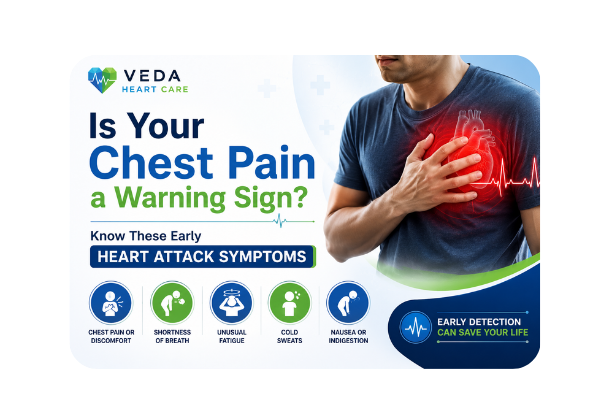
Chest Pain Ignored? These Early Heart Attack Signs Could Save Your Life
Many people dismiss chest discomfort as acidity, gas, stress, or fatigue. However, what seems like a minor issue may actually be one of the most important early heart attack signs your body is trying to communicate.
According to cardiologists worldwide, recognizing early heart attack signs and seeking medical attention quickly can significantly improve survival rates and reduce long-term heart damage. Unfortunately, many patients delay treatment because the symptoms are mild, intermittent, or mistaken for non-cardiac conditions.
At Veda Heart Care, under the guidance of Dr. Paritosh Kumar Rajput, patients receive advanced cardiac evaluation, preventive cardiology consultations, and evidence-based heart care focused on early diagnosis and timely intervention.
Why Ignoring Chest Pain Can Be Dangerous
Chest pain is one of the most common symptoms associated with heart disease. While not every episode of chest pain indicates a heart attack, persistent, unexplained, or recurring discomfort should never be ignored.
The heart requires a constant supply of oxygen-rich blood through the coronary arteries. When these arteries become narrowed or blocked, blood flow decreases, leading to symptoms that may eventually progress to a heart attack.
Many individuals experience early heart attack signs days, weeks, or even months before a major cardiac event.
Common reasons people ignore symptoms include:
- Assuming it is acidity or indigestion
- Believing they are too young for heart disease
- Stress-related symptom confusion
- Temporary symptom relief
- Lack of awareness about silent heart attack signs
What Are the Early Heart Attack Signs?
Recognizing early heart attack signs can save precious time during an emergency.
1. Chest Pressure or Tightness
Many patients describe the sensation as:
- Pressure
- Squeezing
- Heaviness
- Tightness
- Burning discomfort
Unlike muscle pain, cardiac chest pain often occurs in the center or left side of the chest and may worsen during physical activity.
2. Pain Radiating to Other Areas
One of the classic warning signs of heart attack is pain spreading to:
- Left arm
- Both arms
- Neck
- Jaw
- Back
- Shoulder
This symptom occurs because heart-related pain signals travel through shared nerve pathways.
3. Shortness of Breath
Difficulty breathing can occur before chest pain appears.
Patients may notice:
- Breathlessness while walking
- Reduced exercise tolerance
- Difficulty climbing stairs
- Unexplained fatigue
Shortness of breath is among the most overlooked early heart attack signs.
4. Unusual Fatigue
Extreme tiredness without a clear reason may indicate reduced blood flow to the heart.
This symptom is particularly common in women and older adults.
5. Excessive Sweating
Cold sweats occurring without physical exertion may indicate a developing cardiac emergency.
If sweating accompanies chest discomfort, immediate medical evaluation is recommended.
6. Nausea and Indigestion-Like Symptoms
Many patients mistake a heart attack for digestive problems.
Symptoms may include:
- Nausea
- Stomach discomfort
- Vomiting
- Upper abdominal pain
These symptoms are especially common during silent heart attacks.
Silent Heart Attack Signs: The Symptoms Many People Miss
Not all heart attacks cause dramatic chest pain.
A silent heart attack may present with:
- Mild chest discomfort
- Breathlessness
- Fatigue
- Dizziness
- Jaw pain
- Back pain
Because these symptoms appear less severe, patients often delay treatment, increasing the risk of complications.
Understanding silent heart attack signs is crucial for early diagnosis and better outcomes.
Who Is Most at Risk?
Several factors increase the likelihood of developing coronary artery disease and experiencing a heart attack.
Major Risk Factors
High Blood Pressure
Persistent hypertension damages blood vessels and accelerates plaque buildup.
Diabetes
Diabetes significantly increases cardiovascular risk.
Smoking
Smoking contributes to artery narrowing and blood clot formation.
High Cholesterol
Elevated cholesterol levels promote coronary artery blockage.
Obesity
Excess body weight increases strain on the cardiovascular system.
Family History
Genetics can influence heart disease risk.
Stress
Chronic stress may contribute to hypertension and heart disease.
Patients with these risk factors should undergo regular cardiac screening and preventive cardiology evaluations.
Early Symptoms of Heart Disease Often Appear Before a Heart Attack
Many people experience symptoms long before a major cardiac event occurs.
Common early symptoms of heart disease include:
- Recurrent chest pain
- Shortness of breath
- Palpitations
- Fatigue
- Swelling in the legs
- Reduced exercise capacity
Ignoring these warning signs can delay diagnosis and treatment.
When Should You Seek Immediate Medical Attention?
Call emergency medical services or visit the nearest emergency department if you experience:
- Chest pain lasting more than a few minutes
- Sudden shortness of breath
- Pain spreading to the arm, jaw, or back
- Cold sweats
- Severe dizziness
- Loss of consciousness
Prompt treatment can minimize heart muscle damage and improve recovery.
How Cardiologists Diagnose Heart Problems
A comprehensive cardiac evaluation may include:
ECG (Electrocardiogram)
Detects abnormal heart rhythms and signs of reduced blood flow.
Echocardiography
Evaluates heart structure and function.
Treadmill Stress Test
Assesses heart performance during exercise.
CT Coronary Angiography
Provides detailed imaging of coronary arteries.
Coronary Angiography
The gold standard for identifying arterial blockages.
At Veda Heart Care, advanced diagnostic technologies help identify cardiovascular disease before serious complications occur.
Can Heart Attacks Be Prevented?
In many cases, yes.
Preventive cardiology focuses on identifying risk factors and reducing future cardiac events.
Prevention Tips
- Control blood pressure
- Manage diabetes effectively
- Maintain healthy cholesterol levels
- Exercise regularly
- Stop smoking
- Follow a heart-healthy diet
- Maintain a healthy weight
- Schedule routine heart checkups
Preventive strategies can dramatically reduce the risk of developing severe coronary artery disease.
Why Early Detection Matters
The earlier a heart condition is diagnosed, the greater the chances of preventing irreversible heart damage.
Patients who recognize early heart attack signs and seek treatment quickly often experience:
- Better survival rates
- Reduced complications
- Faster recovery
- Improved quality of life
- Lower risk of future heart attacks
Awareness remains one of the most powerful tools in preventing cardiovascular emergencies.
Expert Cardiac Care in Indore
If you are experiencing recurrent chest discomfort, breathlessness, fatigue, or other concerning symptoms, consult Dr. Paritosh Kumar Rajput for comprehensive evaluation and advanced cardiac care.
About Veda Heart Care
Veda Heart Care provides specialized cardiac consultation, preventive cardiology, angiography, angioplasty, and advanced heart disease management with a patient-centered approach.
Frequently Asked Questions (FAQs)
Can chest pain always mean a heart attack?
No. However, persistent or unexplained chest pain should always be evaluated by a cardiologist.
What are the earliest heart attack symptoms?
Chest pressure, shortness of breath, unusual fatigue, sweating, and discomfort radiating to the arm or jaw.
Can young adults have heart attacks?
Yes. Increasing stress, diabetes, smoking, obesity, and sedentary lifestyles have increased cardiac risk among younger individuals.
What is a silent heart attack?
A heart attack with mild or atypical symptoms that may go unnoticed.
How quickly should I seek help for chest pain?
Immediately if symptoms are severe, persistent, or accompanied by breathlessness, sweating, or dizziness.
Can high blood pressure cause a heart attack?
Yes. Uncontrolled hypertension significantly increases cardiovascular risk.
What test is best for detecting blocked arteries?
Coronary angiography remains one of the most accurate diagnostic tests.
How often should heart checkups be done?
Adults above 40 years or those with risk factors should undergo regular cardiac evaluations.
Is shortness of breath always related to the heart?
Not always, but it can be a significant cardiac warning sign and should be assessed.
Can lifestyle changes reduce heart attack risk?
Yes. Healthy diet, exercise, smoking cessation, and regular checkups significantly lower risk.
Share:

Dr. Paritosh Kumar Rajput
Dr. Paritosh Kumar Rajput is a dedicated Interventional Cardiologist at Veda Heart Care, Indore, specializing in coronary angiography, angioplasty, heart attack management, and preventive cardiology. He is committed to providing advanced, patient-centered cardiac care with a focus on early diagnosis, effective treatment, and long-term heart health.
0 Comments