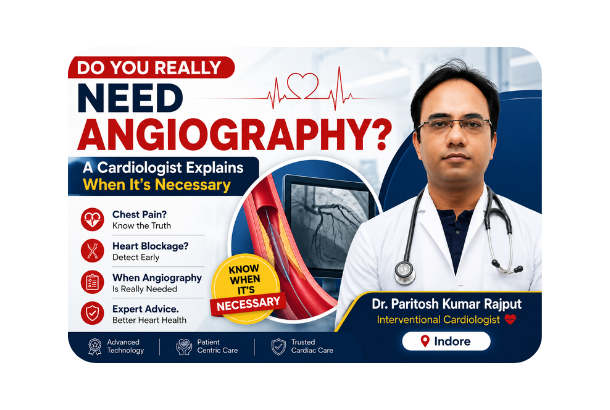
Do You Really Need Angiography? Dr. Paritosh Kumar Rajput Explains When It's Necessary in Indore
Chest Pain, Breathlessness or a Positive Stress Test? Here's When Angiography May Be Recommended
When someone experiences chest pain, shortness of breath, or is told they may have a heart blockage, one of the first questions they ask is:
"Do I really need angiography?"
The word angiography often creates anxiety because many people associate it with serious heart disease. Some patients worry about the procedure, while others wonder whether it is actually necessary.
The truth is that not everyone with chest pain needs angiography, but in certain situations, it can be one of the most important tests for diagnosing potentially life-threatening heart conditions.
According to Dr. Paritosh Kumar Rajput, Cardiologist in Indore, angiography helps doctors accurately identify blockages in the heart arteries and determine the best treatment plan for the patient.
Let's understand when angiography is really needed and when your cardiologist may recommend it.
What Is Angiography?
Angiography is a specialized diagnostic procedure used to visualize the blood vessels supplying the heart.
During the procedure, a special dye is injected into the coronary arteries, and X-ray images are taken to identify:
-
Blockages in heart arteries
-
Narrowing of blood vessels
-
Reduced blood flow to the heart
-
Severity of coronary artery disease
-
Areas requiring angioplasty or bypass surgery
Angiography remains one of the most accurate methods for diagnosing coronary artery disease.
Why Is Angiography Performed?
The main purpose of angiography is to determine whether symptoms are caused by blocked or narrowed heart arteries.
Many patients experience symptoms such as:
-
Chest pain
-
Chest tightness
-
Shortness of breath
-
Fatigue during activity
-
Dizziness
-
Irregular heartbeat
In these situations, angiography helps provide clear answers and guides further treatment.
Signs That You May Need Angiography
Not everyone requires angiography. However, certain warning signs make the test more likely to be recommended.
1. Recurring Chest Pain
If chest pain keeps coming back, especially during physical activity, it may indicate reduced blood supply to the heart.
Common Symptoms:
-
Chest pressure
-
Tightness
-
Heaviness in the chest
-
Pain during walking
-
Discomfort while climbing stairs
These symptoms should never be ignored.
2. Positive Stress Test Results
A stress test helps evaluate how your heart performs during physical exertion.
If the stress test shows abnormalities, your cardiologist may recommend angiography to identify the exact location and severity of any blockage.
3. Suspected Heart Artery Blockage
When symptoms strongly suggest coronary artery disease, angiography is often the next step.
Warning Signs Include:
-
Chest discomfort
-
Shortness of breath
-
Reduced exercise capacity
-
Fatigue
-
Abnormal ECG findings
4. After a Heart Attack
Patients who have suffered a heart attack frequently require angiography.
The procedure helps doctors:
-
Locate the blocked artery
-
Assess the severity of blockage
-
Plan angioplasty if needed
-
Prevent future complications
5. High-Risk Cardiac Symptoms
Some symptoms indicate a higher risk of serious heart disease.
Seek Immediate Medical Attention If You Experience:
-
Severe chest pain
-
Chest pain spreading to the arm or jaw
-
Sudden breathlessness
-
Excessive sweating
-
Dizziness
-
Fainting
In such situations, angiography may play a critical role in diagnosis and treatment.
Who Is More Likely to Need Angiography?
Certain individuals have a higher risk of developing heart artery blockages.
Major Risk Factors
-
High blood pressure
-
Diabetes
-
High cholesterol
-
Smoking
-
Obesity
-
Family history of heart disease
-
Physical inactivity
-
Chronic stress
If you have multiple risk factors and symptoms suggestive of heart disease, angiography may be recommended.
When Angiography May Not Be Necessary
Many patients are surprised to learn that not every chest pain requires angiography.
In some cases, symptoms may be caused by:
-
Acidity
-
Muscle strain
-
Anxiety
-
Gastric problems
-
Respiratory conditions
Your cardiologist may first recommend:
-
ECG
-
Echocardiography
-
Blood tests
-
Stress testing
-
CT scans
Angiography is usually advised only when there is sufficient evidence of heart disease or a high risk of blockage.
Is Angiography Painful?
One of the most common concerns patients have is whether angiography is painful.
The procedure is generally well tolerated.
Most patients experience:
-
Mild discomfort at the insertion site
-
Temporary warmth from the contrast dye
-
Minimal pain during the procedure
Modern angiography techniques are safe, efficient, and widely performed.
What Happens If a Blockage Is Found?
If angiography reveals a blockage, treatment depends on its severity.
Possible treatment options include:
Medication
For mild blockages and risk-factor control.
Angioplasty
A minimally invasive procedure used to open blocked arteries.
Coronary Artery Bypass Surgery (CABG)
Recommended in selected cases involving multiple or severe blockages.
Your treatment plan will depend on your overall health and the extent of the blockage.
How Can You Reduce Your Risk of Heart Blockages?
Prevention remains the best strategy for protecting your heart.
Heart-Healthy Habits
✔ Exercise regularly
✔ Maintain a healthy weight
✔ Eat a balanced diet
✔ Control blood pressure
✔ Manage diabetes effectively
✔ Stop smoking
✔ Reduce stress
✔ Get regular heart checkups
✔ Sleep adequately
Small lifestyle changes can significantly lower your risk of coronary artery disease.
Why Early Diagnosis Matters
Heart disease often develops silently over many years.
Early detection can help:
-
Prevent heart attacks
-
Reduce complications
-
Improve treatment outcomes
-
Protect long-term heart function
-
Improve quality of life
Ignoring warning signs can delay treatment and increase health risks.
Why Patients Trust Dr. Paritosh Kumar Rajput
Choosing the right heart specialist is essential when dealing with potential heart disease.
Dr. Paritosh Kumar Rajput Offers:
-
Comprehensive cardiac evaluation
-
Advanced heart disease diagnosis
-
Preventive cardiology guidance
-
Personalized treatment planning
-
Evidence-based cardiac care
-
Patient-focused consultation
Patients seeking expert cardiac care in Indore trust Dr. Paritosh Kumar Rajput for professional and compassionate heart health management.
Trusted by Patients Across Indore
Patients from:
-
Vijay Nagar
-
Palasia
-
Nipania
-
Bengali Square
-
Scheme 140
-
Mahalaxmi Nagar
-
AB Road
-
Bombay Hospital Area
-
Nearby Indore Locations
regularly seek consultation for chest pain, heart disease evaluation, angiography guidance, and preventive cardiac care.
Frequently Asked Questions (FAQs)
1. What is angiography used for?
Angiography is used to detect blockages or narrowing in the heart arteries.
2. Does everyone with chest pain need angiography?
No. Your cardiologist will determine whether the test is necessary based on symptoms and other investigations.
3. Is angiography safe?
Yes. It is a commonly performed and generally safe diagnostic procedure.
4. How long does angiography take?
The procedure usually takes 20–60 minutes, depending on the case.
5. Is angiography painful?
Most patients experience only mild discomfort.
6. Can angiography detect heart blockages?
Yes. It is one of the most accurate tests for identifying coronary artery blockages.
7. What happens after angiography?
Treatment may include medications, angioplasty, or surgery depending on the findings.
8. Can diabetes increase the need for angiography?
People with diabetes have a higher risk of coronary artery disease and may require detailed evaluation.
9. What are the warning signs of heart blockage?
Chest pain, breathlessness, fatigue, dizziness, and reduced exercise tolerance.
10. When should I see a cardiologist?
If you experience recurring chest pain, breathlessness, or other heart-related symptoms.
Final Thoughts
Angiography is a valuable diagnostic tool that helps doctors accurately identify heart artery blockages and determine the most appropriate treatment plan.
While not every patient with chest pain requires angiography, certain symptoms, abnormal test results, and risk factors may make the procedure necessary.
If you are experiencing chest discomfort, breathlessness, or have concerns about heart disease, seeking timely consultation with an experienced cardiologist can help protect your heart and prevent serious complications.
Share:

Dr. Paritosh Kumar Rajput
Dr. Paritosh Kumar Rajput is a dedicated Interventional Cardiologist at Veda Heart Care, Indore, specializing in coronary angiography, angioplasty, heart attack management, and preventive cardiology. He is committed to providing advanced, patient-centered cardiac care with a focus on early diagnosis, effective treatment, and long-term heart health.
0 Comments